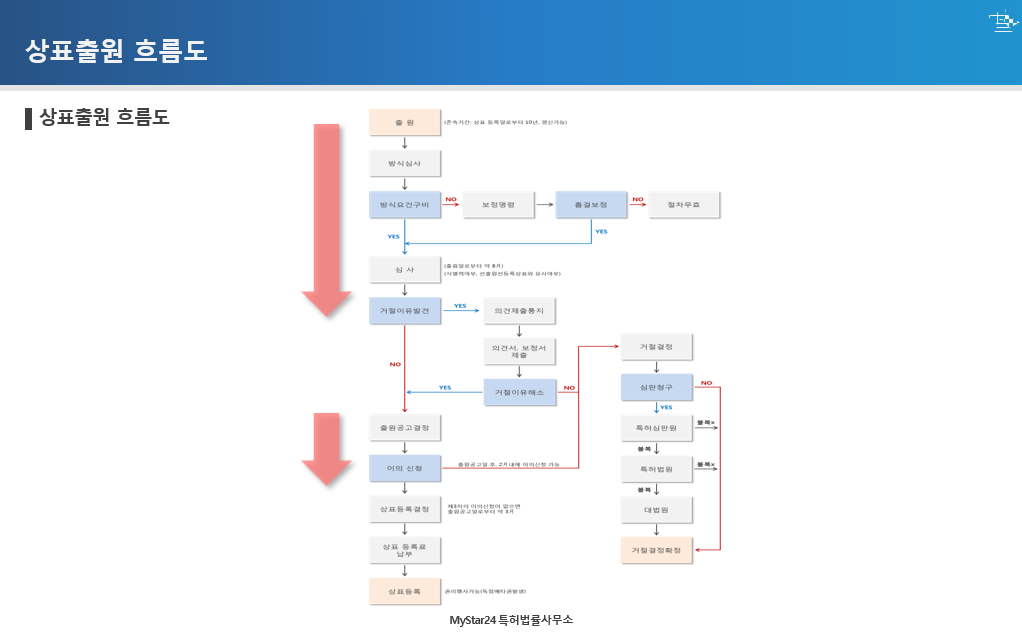
Message
A trade name, service name, or product name should be easy for customers to remember and pronounce. In trying to create a name that is easy to remember and pronounce, names that everyone wants to use often appear attractive.
However, under trademark law, names that everyone wants to use are often difficult to register or fall within a scope where trademark rights have no effect (Article 90 of the Trademark Act), making enforcement difficult even if registration is obtained.
In addition, if issues arise such as i) concern over infringement of another party's trademark rights, ii) a refusal decision for the filed trademark, or iii) inability to secure a domain name, changing the trademark already in use may need to be considered.
A trademark is like a person's name, and once chosen, it is not easy to change. In particular, after signs, a website, promotional materials, and the like have been prepared and distributed to business contacts and customers, business goodwill may become embodied in the existing trademark, and the business damage caused by changing the trademark can be serious.
Therefore, you should give careful consideration from the stage of selecting a trademark. Specifically, you should estimate the likelihood of trademark registration before considering a trademark application, and also anticipate the extent to which infringement claims may be asserted against unauthorized use of the trademark by others after registration.
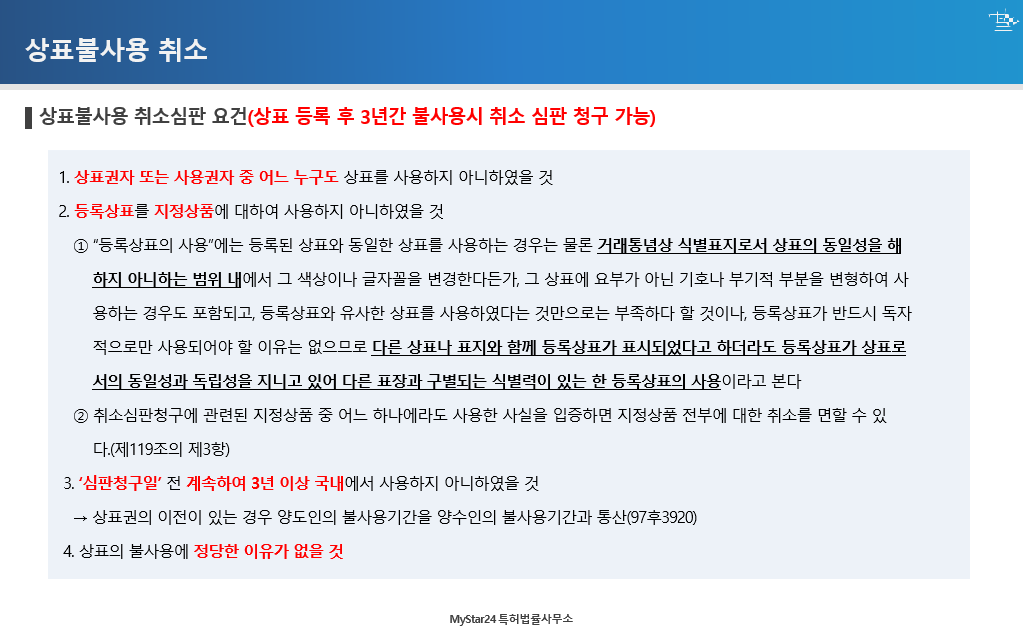
In addition, after registration, you must fulfill your obligation to use the trademark so as not to become subject to non-use cancellation or cancellation for improper use under Article 119 of the Trademark Act.
Because there are many issues to consider when selecting a trademark, consultation with a Patent Attorney is essential from the trademark selection stage, regardless of industry. A cheap trademark application alone is not the answer. We recommend that you obtain the opinion of a Patent Attorney specializing in trademarks, whether at our firm or elsewhere, before filing a trademark application.
Review of Trademark Registrability
To review the likelihood of trademark registration, Article 33 of the Trademark Act (Requirements for Trademark Registration) and Article 34 of the Trademark Act (Trademarks Not Eligible for Registration) are considered.
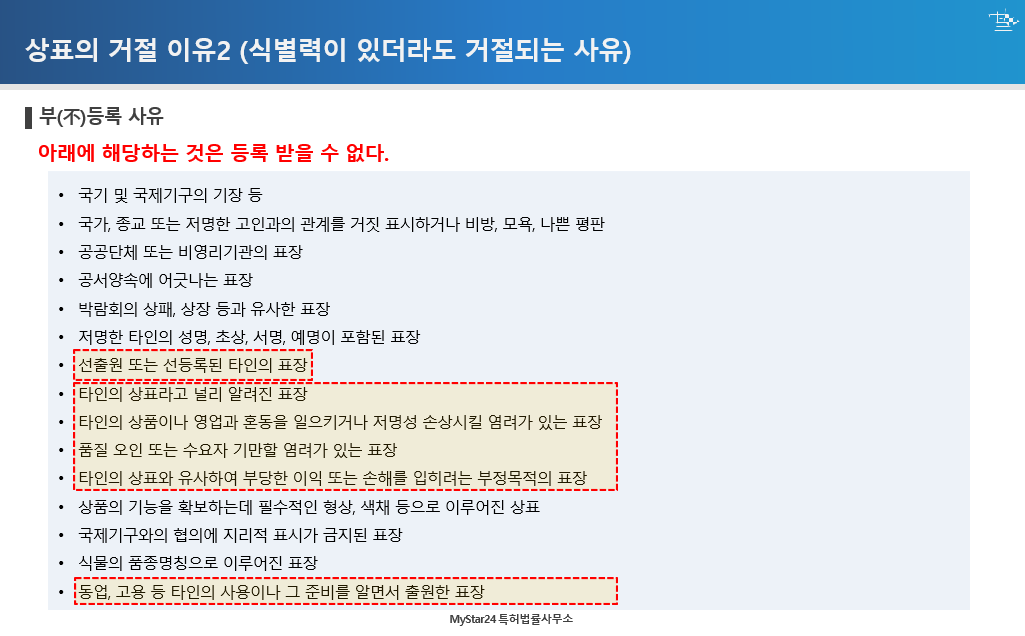
Article 34 of the Trademark Act (Trademarks Not Eligible for Registration) provides grounds for refusal, including the existence of another party's earlier-filed or earlier-registered trademark, and likelihood of confusion as to source or quality. However, each trademark application must be reviewed case by case, which can make it difficult for non-specialists to judge.
By contrast, Article 33 of the Trademark Act (Requirements for Trademark Registration) can be reviewed relatively easily. When selecting a trademark, please review the grounds for non-registration below, first list marks that do not appear to fall under those grounds, and then visit our firm. This can reduce the time required to select and file a trademark.
Grounds for Refusal of Trademark Registration
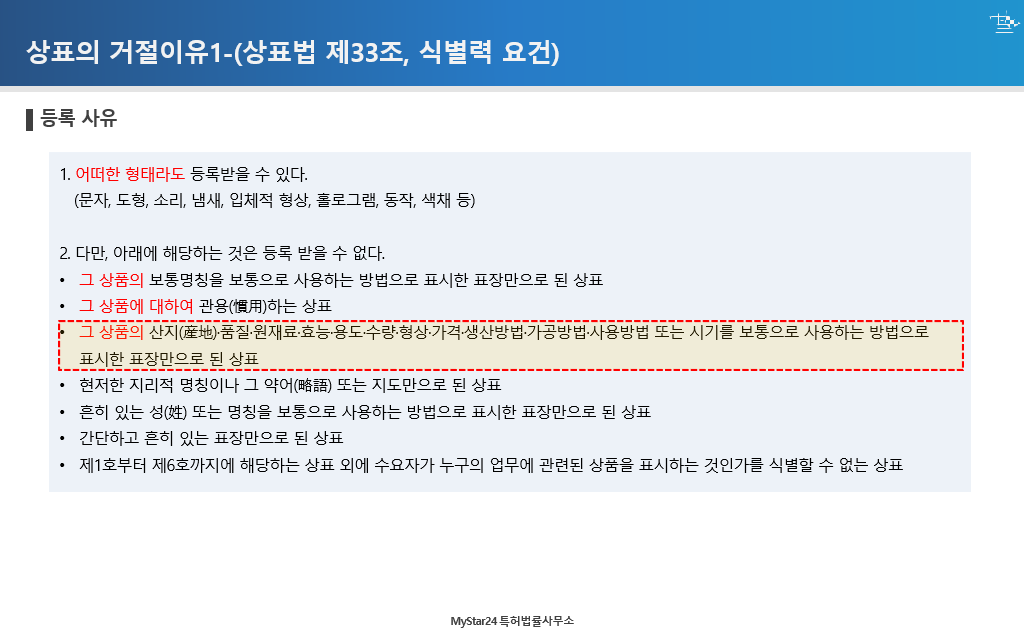
The following are cases where a trademark cannot be registered (Trademark Act Article 33).
1. Generic names of goods
This refers to a trademark that indicates the name of the goods in relation to specific goods.
(Examples: snack products-Corn Chip, confectionery-Hodo Gwaja, automobiles-Car)
2. Customary trademarks
This refers to marks customarily used among businesses in the same industry for a certain type of goods.
(Examples: confectionery-Kkang, cheongju-Jeongjong, textiles-Tex)
3. Descriptive trademarks
Indication of place of origin: indicates the place where the relevant goods are produced.
(Examples: apples-Daegu, ramie-Hansan, gulbi-Yeonggwang)
Indication of quality: indicates the condition, superiority, or other quality of the relevant goods.
(Examples: High, Medium, Low, Special Selection, Super)
Indication of raw materials: indicates the name of goods used as raw materials for the relevant goods.
(Examples: suits-Wool, neckties-Silk)
Indication of efficacy: refers to a trademark indicating the effects or performance of the relevant goods.
(Examples: TV-HITEK, copier-Quick Copy)
Indication of intended use: refers to a trademark indicating the use of the relevant goods.
(Examples: bags-Student, clothing-Lady)
Indication of quantity: 2 pairs, 100 meters, etc.
Indication of shape: indicates the form, shape, size, etc. of the relevant goods.
(Examples: Small, Large, Capsule, SLIM)
Indications of production methods, processing methods, and business methods: trademarks indicating the method of producing, processing, or using the relevant goods.
(Examples: agricultural products-natural farming, shoes-handmade, desks-assembled)
Indication of time: indicates the time of use, etc. of the relevant goods.
(Examples: tires-all-weather, clothing-spring/summer/fall/winter)
4. Prominent geographical names, abbreviations, or maps
This refers to geographical names prominently recognized by consumers.
(Examples: Geumgangsan, Baekdusan, New York, etc.)
5. Common surnames or names
This refers to names indicating common natural-person surnames or corporations, organizations, or trade names.
(Examples: Lee, Kim, president, trading company, association, chancellor, etc.)
6. Simple and common marks
This refers to marks whose composition is simple and common.
(Examples: 123, ONE, TWO, ß, etc.)
7. Other marks lacking distinctiveness
Commonly used slogans, catchphrases, greetings, etc.
(Examples: Believe it or not, I can do, www, etc.)
Trademark Searches by Country
The table below contains links to trademark search sites by country.
To assess registrability when filing a trademark application, it is necessary to consider the trademark law of the relevant country, language usage in that country, and the level of perception among consumers in that country. A trademark search for another country can be conducted in a technical sense, but to assess the likelihood of trademark registration, it is necessary to obtain an opinion from a local associate.
The cost of obtaining a trademark search and comments from a local associate for another overseas country is approximately $150-$400 per Nice class (varies by country). If you wish to review registrability before proceeding with a trademark application in an overseas country, please complete the inquiry form above and click Send, or contact our firm. For trademark matters handled by our firm, we provide overseas filing guidance with explanations by the relevant deadline.
| Major Filing Countries | Asia | Europe | North/South America | Other |
|---|---|---|---|---|
| Republic of Korea | Taiwan | Denmark | Mexico | Australia |
| Vietnam | Macau | Germany | Canada | |
| India | Malaysia | Luxembourg | ||
| Japan | Maldives | Belgium | ||
| China | Oman | United Kingdom | ||
| European Union | Myanmar | Poland | ||
| United States | Brunei | Hungary | ||
| Indonesia | ||||
| Cambodia | ||||
| Philippines | ||||
| Singapore | ||||
| Thailand | ||||
| Hong Kong |
Overview of the Trademark System